Latest News

Tweet us@PrisonRadioUK
Tweet us@PrisonRadioUK

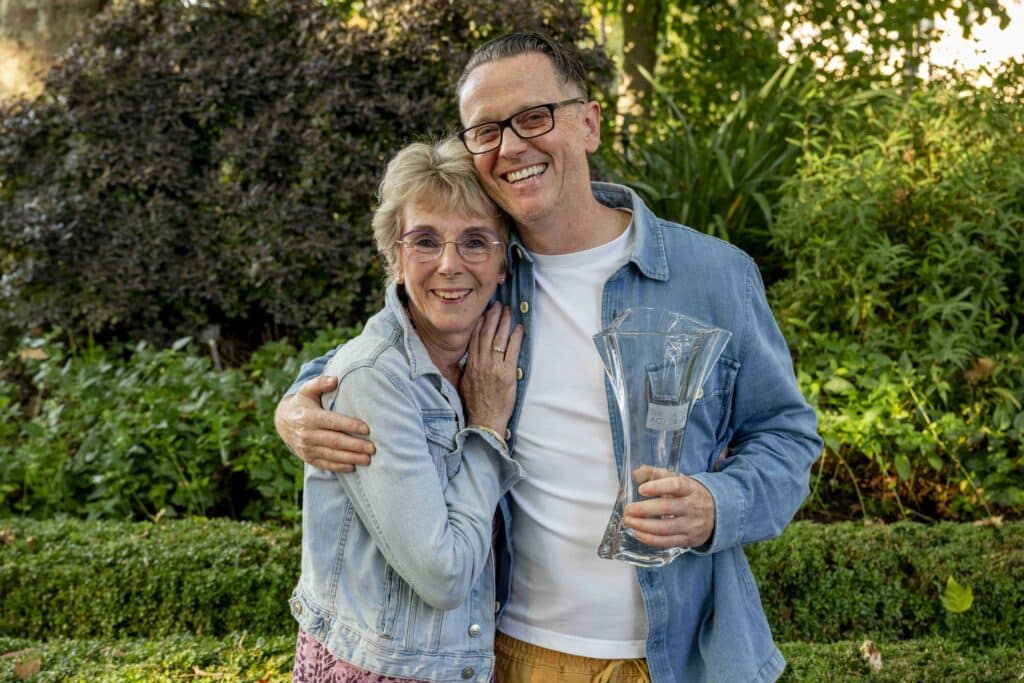
After nearly two decades of energy, passion and deeply human leadership, our founding Chief Executive, Phil Maguire, will step down at the end of this year.
Phil co-founded the Prison Radio Association in 2006, following his work leading the BBC’s prison radio pilot. Almost 20 years on, he leaves the charity in a position of real strength: with a national and international reputation for award-winning audio, clear impact, and an unwavering sense of purpose. This year alone, the PRA was named Production Company of the Year at the Audio Production Awards and Podcast Network of the Year at the British Podcast Awards.
It’s been quite a journey.
What follows below is Phil’s own reflection on that journey – why the time feels right to step aside, what the PRA has become, and what comes next. These are his words, written with the same honesty, care, integrity and gratitude that have shaped the organisation from the very beginning…
After nearly two decades as Chief Executive of the Prison Radio Association, I’ve decided that the time has come for me to step aside.
My decision comes from a place of deep pride in what we’ve built, confidence in where the organisation is now, and belief in what comes next.
I wanted to write this myself because the PRA has never just been a job to me. It has been a huge part of my life, my identity, and my sense of purpose. So, this feels like a moment that deserves honesty, care and gratitude – not just a press release.
I’ve spent much of my adult life in studios.
And some of the most extraordinary radio I’ve ever heard has been made by people the world had written off.
That truth has shaped me. And it’s shaped the PRA.
Over 22 years ago, I was working as a broadcast journalist at the BBC when I heard about a small radio station inside Feltham Young Offender Institution. As a radio producer – and a former residential social worker – I was immediately intrigued. Radio made with people in prison, for people in prison, felt powerful and full of possibility.
That curiosity eventually led me to lead a nine-month pilot as the BBC’s Prison Radio Project Manager – to explore how prison radio could be expanded and professionalised. The pilot worked. What didn’t exist was a plan for what came next. So, I left the BBC and, with Roma Hooper, Mark Robinson, Kieron Tilley, and others, helped to set up the Prison Radio Association as a charity.
I did it because I believed in the idea. I did it because I really, really love radio. And I did it because I could see the potential for audio to offer connection, dignity and practical support to people living in some of the most difficult circumstances imaginable.
It’s easy to forget how improbable all of this once felt. At its heart, the PRA exists to do something simple and radical: put the voices of people in prison at the centre of the story. The PRA is built on a simple belief: people in prison are more than the mistakes they’ve made – and they deserve to be heard.
What started as a tiny organisation with a huge amount of belief in a really amazing idea has grown into something far bigger than I ever imagined.
Today, the Prison Radio Association is home to an incredible staff team. We run National Prison Radio, the world’s first national radio station for people living behind bars, broadcasting 24 hours a day and reaching the vast majority of people in prison across England and Wales – offering information, companionship, inspiration, encouragement and joy.
And, crucially, a voice.
Alongside this, we produce a wide range of podcasts that take the voices and experiences of people impacted by the criminal justice system beyond the prison walls – reaching families, practitioners, policymakers and the wider public. We also produce award-winning and impactful programmes for the BBC, helping to broaden public understanding of prisons and justice through honest, carefully-made solutions-focussed storytelling.
We nurture talent inside prisons and after release, supporting people to develop skills, confidence and careers, with many going on to do extraordinary things – including working across the BBC and the wider creative industries.
Through helping to build Prison Radio International, we’re part of a growing global movement, supporting audio projects in criminal justice settings across dozens of countries, all driven by the same simple belief: that people with lived experience should be at the heart of telling these stories.
I am incredibly proud of how far this work has travelled – from a single prison radio station in Brixton to a national service, a slate of award-winning productions, and a growing global movement.
One thing that has remained constant throughout this journey is the centrality of lived experience.
From the very beginning, the PRA believed that the most powerful, credible and humane storytelling we can deliver comes from people who have experienced the criminal justice system themselves. This isn’t something we’ve adopted recently; it has always been fundamental to who we are.
It shapes how we make programmes, how we develop talent, how we work with partners, and how we think about the future. More than a fifth of our staff team have direct experience of prison, and the voices our audiences trust the most are those who have lived the realities we’re talking about.
I am convinced that this commitment – to authenticity, dignity and lived experience – is one of the main reasons the organisation is as strong as it is today, and why its future feels so promising.
A defining feature of the PRA has been our relationship with the Ministry of Justice and HM Prison and Probation Service.
I am genuinely proud of the partnership we’ve built over many years. It hasn’t always been easy, and it was never meant to be. Working inside the criminal justice system requires diplomacy, persistence and a willingness to engage with complexity.
What has mattered to us is that we have been able to collaborate constructively while maintaining our editorial independence, creative freedom and journalistic integrity. That balance – partnership alongside challenge – has shaped our identity and strengthened our work. It has allowed us to amplify voices from inside prisons in ways that are trusted, ethical and impactful.
Over the years, I have also seen how audio can influence the system from the inside – not through grandstanding, but through integrity, trust and constructive dialogue. When prison staff and leaders listen, they hear the day-to-day reality of life on a wing: what supports rehabilitation, what undermines it, and what people need to survive their sentence and prepare for release.
And when people in prison listen, they hear honest conversations that help make sense of the complex realities and constraints of running prisons. At our best, the work creates a bridge – a clearer, more human understanding in both directions. That is one of the things I will always be proudest of.
I’ve watched conversations happen on air that could never have happened anywhere else. A prisoner hearing a governor speak honestly. A governor hearing, in real time, what a rule or a regime actually does to someone’s life. That’s what I mean by influencing the system from the inside: creating truthful, fruitful dialogue, held with integrity, that helps people in prison feel seen and helps people in authority see more clearly. It’s like magic. But it’s not magic, really. It’s trust, honesty and persistence. And it matters. Because it changes things in incredible ways.
In the charity sector, there’s a phrase you hear from time to time: founder syndrome. It describes what can happen when people stay too long in organisations they helped to create, and end up getting in the way of the next phase.
I’ve always been conscious of that risk, and I’ve never wanted it to be part of my story.
As organisations grow and mature, the kind of leadership they need changes. My own leadership has been instinctive, values-led and deeply people-centred. That approach has served the PRA well for a long time, and I’m proud of it. But I also believe that where the organisation is now – and where it’s going next – calls for something different.
The reason I can step away with confidence is simple: the Prison Radio Association is in excellent shape. And in very, very safe hands.
I am incredibly proud that my friend and colleague Andrew Wilkie is stepping up to lead the organisation into its next phase.
Me and Andrew have worked side by side for 19 years. We’ve spoken almost every working day for nearly two decades. We know each other’s strengths, blind spots and values intimately. Leaving that partnership is, without question, the hardest part of this decision. I’m going to miss him more than I can properly put into words.
But I also know that Andrew has the drive, vision and determination to take the PRA forward, supported by an outstanding senior team and a deeply committed Board of Trustees. I have absolute confidence in his leadership and in the collective strength of the organisation.
This has also been a remarkable year for the PRA – our strongest yet in terms of awards and recognition – which feels like a fitting moment to pass the baton. The work is landing, the impact is clear, and the future is bright.
I leave this organisation as, officially, the UK’s leading production company, having been crowned Production Company of the Year at the Audio Production Awards just last month. The month before, we were named Podcast Network of the Year at the British Podcast Awards. We won the coveted Rose D’Or for our remarkable documentary, The Ballad of Scout and the Alcohol Tag, which has swept the board at the ARIAS and the New York Festival Radio Awards.
What makes me proudest of these achievements is that they’ve been created from that special seed that makes this organisation unique – the very best audio professionals working hand-in-hand, in equal partnership, with people who have lived behind bars. All our people have an intimate knowledge of the criminal justice system, and this success means I’m able to go out on a high.
There are many people to thank. Too many. So – if you are not mentioned here – it is not because I don’t value your contribution to our work.
First and foremost, Roma Hooper, Mark Robinson and Kieron Tilley, whose belief, courage and generosity helped bring the Prison Radio Association into being. I owe them more than I can easily express.
I’m deeply grateful to our patrons – Baroness Floella Benjamin, George the Poet, Jon Snow, Lord Hastings of Scarisbrick, Raphael Rowe, Lady Chakrabarti and Louis Theroux – for their support, belief and advocacy over many years.
Thank you so much to the PRA’s brilliant Chair, Ryan Wain, and to the PRA’s Board of Trustees, past and present, for their wisdom, care and commitment. And to every colleague I’ve worked alongside over the last two decades – those who are still part of the organisation and those who have gone on to do wonderful things elsewhere.
I also want to thank the hundreds of partner organisations we work with each year – charities, broadcasters, academics, practitioners and statutory organisations – who bring their expertise, trust and energy into the work. These partnerships deepen our impact, and we’re proud that, in return, we help partners extend their impact too. Together, we’re able to breathe life into what we do, and support people in and beyond prison in practical, meaningful ways.
And to our funders: the brave, farsighted people and organisations who really get it, and who are willing to back impact rather than profit – thank you. As a charity, our bottom line isn’t financial return, it’s social change. None of this work would exist without your belief, generosity and trust.
In particular, I want to acknowledge the many colleagues with lived experience whose courage, creativity and generosity have shaped the PRA in ways that matter deeply.
And above all, thank you to the thousands of people in prison who have trusted us. Everything we do begins and ends there.
To everyone in prison who has ever phoned the station, recorded a message, written to us, or taken part in an interview – thank you. You trusted us with your voice, and you helped shape the work. You told us what mattered, what was missing, what was useful, what was kind, and what needed to change. We listened, and we built the service around that trust.
And to the people who have gone further still – stepping up to present programmes, make radio day after day, and put yourselves at the helm of a show – thank you. Finding your voice in public, in that environment, is a brave thing. You made the radio. You made the moments of hope and connection. You proved, repeatedly, what becomes possible when someone is given responsibility, support and a microphone. And you reminded all of us what people are capable of.
Although I’m leaving my role as Chief Executive, I’m delighted that my connection with the PRA will continue in a couple of very specific ways. I will continue to co-host the award-winning podcast The Secret Life of Prisons and to act as executive producer of the slate of programmes the Prison Radio Association makes for the BBC.
That ongoing connection – to the organisation, and to our audiences, means so much to me.
I’m 53 now, and when I turned 50, I started asking myself some quieter questions about how I wanted to live, what brought me joy, and how I wanted to feel in the world beyond work.
Around that time, I returned to something I’d been drawn to on and off over the years: actor training. I committed to it seriously, alongside my role at the PRA. What surprised me most was how stepping into character as someone else gave me the freedom to be more fully myself – and how it made me feel alive in a way that was new and profound.
Over recent years I’ve undertaken a wide range of training, and I’m currently involved in David Copperfield: A Life – a year-long, epic production directed and devised by the Olivier Award-winning Sally Cookson, and staged at the Theatre Royal Bath with the largest cast ever to appear on that stage. Being part of a project of that scale and ambition – and stepping into the role of David – is an utter joy.
To be clear, I’m not walking away from the privilege of a lifetime to “become an actor” – that would be a very poor business plan. But the arts, and being around them, bring me enormous joy, and they will remain an important part of my life.
I don’t have a neat plan for what comes next, and I’m comfortable with that.
What I do know is that my future will almost certainly involve making radio – the thing I love most. I’d love to do more presenting. I’ve recently trained with the Solutions Journalism Network and plan to pursue that work further. I’m an accredited facilitator and enjoy holding spaces where people can think, reflect and work out where they’re going.
I’m also interested in training, teaching, consultancy, and possibly supporting organisations as an interim leader during periods of transition. I’m open to conversations, collaborations and new ideas – and I’d love to hear from people who think we might do something good together.
The Prison Radio Association has been the privilege of my working life. I am immensely proud of what we’ve built together, of the impact it has had, and of the people who carry it forward.
I step aside with gratitude, confidence and love – knowing the work is strong, the organisation is resilient, and the future is in very good hands.
Please do keep supporting the Prison Radio Association if you can.
www.prison.radio/donate
And as I step into whatever comes next – wish us all luck.
Phil Maguire. x